
Technology & Safety Standards Breakdown, Post
How HJC’s P.I.M. Plus Technology Optimizes Shell Weight Without Sacrificing Maximum Protection
May
HJC In the engineering landscape of motorcycle helmet manufacturing, developers have historically been trapped within a rigid, unforgiving paradox. To build a helmet capable of surviving violent, high-velocity impacts, the traditional solution was to add structural mass—thicker outer plastic layers and denser internal foam cores. However, adding physical mass creates a severe mechanical drawback: weight. A heavy helmet acts as a malicious lever on a rider’s neck, drastically amplifying G-forces during hard braking, causing severe muscle fatigue during long journeys, and increasing the risk of cervical spine injuries during a high-speed tumble.
Conversely, attempting to build an ultra-lightweight helmet using basic single-layer materials often results in a fragile outer shell that cracks open or suffers localized punctures upon initial contact with sharp road debris. For decades, motorcyclists had to make an uncomfortable compromise, choosing between the absolute protection of a heavy lid or the comfortable agility of a lightweight shell.
To completely dismantle this structural compromise, HJC Helmets dedicated years of intense laboratory research and track testing to advanced material science. The fruits of this engineering effort led to the development of a proprietary, multi-composite shell architecture: Premium Integrated Matrix Plus, universally known as P.I.M. Plus.
By layering highly specialized technical fabrics in a mathematically optimized matrix, HJC achieved the ultimate goal of modern head protective engineering: drastically shedding external shell weight while simultaneously elevating structural impact resistance to MotoGP-certified thresholds.
In this comprehensive technical breakdown, we will dissect the material anatomy of HJC ‘s P.I.M. Plus technology, analyze the complex physics behind its energy-dissipation capabilities, and explain why this advanced composite is worth every single penny for safety-minded street riders and track racers alike.
1. Unpacking the Matrix: The Four Advanced Material Layers
The defining secret of P.I.M. Plus technology does not rely on a single “miracle” material. Instead, its protective power stems from a highly complex, multi-layered weave of four distinct technical fibers. Each layer is selected for its unique mechanical properties, and when bonded together with a specialized automotive-grade epoxy resin under immense pressure, they form an inseparable, hyper-resilient shield.
+-----------------------------------------------------------------------+
| HJC P.I.M. PLUS STRUCTURAL FIBER GRID                                 |
+-----------------------------------------------------------------------+
| Layer 1: High-Modulus Carbon Fiber (Tensile Stiffness & Low Weight)   |
| Layer 2: Carbon-Glass Hybrid Fabric (High-Velocity Puncture Defense)  |
| Layer 3: Aramid / Kevlar Weave (Structural Flex & Fracture Resistance)|
| Layer 4: Premium Organic Fiberglass (Kinetic Dispersion Matrix)       |
+-----------------------------------------------------------------------+
Layer 1: High-Modulus Carbon Fiber
The outermost core structural layer consists of premium High-Modulus Carbon Fiber. Carbon fiber is celebrated throughout the aerospace and hypercar industries for its extraordinary tensile stiffness and structural strength-to-weight ratio. By utilizing high-modulus weaves, HJC ensures that the structural baseline of the shell remains intensely rigid, preventing the helmet from deforming or collapsing under crushing forces, all while keeping the physical weight profile down to a bare minimum.
Layer 2: Carbon-Glass Hybrid Fabric
Directly beneath the pure carbon layer lies a highly specialized Carbon-Glass Hybrid Fabric. While pure carbon fiber is exceptionally rigid, it can exhibit brittle characteristics under highly localized, ultra-sharp impacts. By interweaving carbon strands with high-strength glass filaments, HJC creates a hybrid layer that acts as an elite puncture barrier. If a flying road stone or a sharp motorcycle component strikes the helmet at high speed, this hybrid layer absorbs the localized stress point, distributing the energy across a wider lateral grid and preventing the object from piercing through the shell.
Layer 3: Aramid (Kevlar) Technical Weave
The third layer introduces a dense weave of Aramid fibers, commercially known as Kevlar. Aramid is globally renowned for its exceptional impact resistance, high thermal stability, and unparalleled fracture toughness. The primary mechanical duty of the aramid layer inside the P.I.M. Plus matrix is to introduce structural elasticity.
When the helmet undergoes a severe crash impact, the outer rigid layers work to crack and halt the initial force, while the underlying aramid weave flexes dynamically without tearing. This prevents catastrophic structural failure of the shell, keeping the entire helmet assembly bound together even throughout complex, multi-impact crash scenarios.
Layer 4: Premium Organic Fiberglass
The final foundational layer consists of a customized Organic Fiberglass mesh. This structural fabric acts as the unifying backing matrix. It works to smooth out internal energy transfers, capturing any remaining micro-vibrations or kinetic waves that bypass the outer composite layers, ensuring that the underlying multi-density EPS foam liner can compress uniformly to protect the rider’s brain.
2. The Physics of Protection: Controlled Micro-Deformation
To understand why the P.I.M. Plus matrix outperforms traditional single-material helmets (such as standard polycarbonate or basic fiberglass models), one must examine the kinetic physics of a motorcycle accident. A common misconception is that a helmet shell should remain completely unyielding and rock-hard during a crash. In reality, a shell that is completely rigid acts as an efficient conductor, transferring the raw, concussive impact wave straight through the foam liner and directly into the rider’s skull.
The P.I.M. Plus composite architecture behaves like the engineered crumple zone of a modern high-end sports car. When the helmet strikes a solid object—such as a concrete curb or trackside asphalt—the multi-layered fiber grid undergoes controlled micro-deformation.
Upon the moment of contact, the outer carbon layers fracture at a microscopic level, intentionally consuming a massive portion of the initial kinetic energy. Simultaneously, the hybrid and aramid layers flex and stretch, spreading the localized impact force horizontally across the wider surface area of the matrix.
By scattering the kinetic energy laterally across the shell, the P.I.M. Plus material drastically dampens the peak G-force spike before it can penetrate the interior. This dispersion allows the internal multi-density EPS foam liner to manage the remaining energy over a longer duration, reducing the risk of severe concussions and traumatic brain injuries. Furthermore, this dynamic flex is the core reason why P.I.M. Plus helmets easily conquer the rigorous rotational and oblique impact protocols demanded by modern ECE R22.06 and FIM Homologation standards.
3. Weight Optimization: The War Against Rider Fatigue and G-Forces
Shedding grams from a helmet’s total weight profile may seem like a minor aesthetic luxury on paper, but on the open road or a closed racing circuit, it is a critical performance factor. When a rider is traveling at high speeds, their neck muscles are constantly working to stabilize their head against violent wind resistance and aerodynamic drag.
Consider the physics of braking: when dropping anchor from 150 mph down to 50 mph before tipping into a sharp corner, a helmet’s effective weight is multiplied dramatically by deceleration forces. A helmet that weighs an extra 200 grams can feel like an additional several kilograms pulling on the rider’s neck under heavy braking. This repetitive physical strain leads to premature exhaustion, causing the rider’s reflexes to slow down, their spatial awareness to drift, and their lap times to drop.
By executing the P.I.M. Plus manufacturing process inside highly precise, specialized heated steel molds, HJC is able to control the exact amount of epoxy resin injected into the fiber matrix. This meticulous process ensures that there is zero pooling of excess resin, keeping the shell structural wall exceptionally thin and uniform.
The direct mechanical result is a flagship full-face helmet that weighs significantly less than its standard polycarbonate counterparts. When you place a P.I.M. Plus helmet on your head, the reduction in physical mass is instantly noticeable. On long-distance tours or intense track days, this weight optimization completely eliminates neck strain, allowing you to remain fresh, sharp, and entirely focused on hitting your apexes or scanning the road ahead.
4. Real-World Applications: The Flagship HJC RPHA Series
Because P.I.M. Plus is HJC’s absolute pinnacle composite technology, it is reserved exclusively for their premium, high-performance product family: the legendary RPHA (Revolutionary Performance Helmet Advantage) series.
+-------------------+--------------------+--------------------+--------------------+
| Model             | Helmet Category    | Core Safety Badge  | P.I.M. Plus Benefit|
+-------------------+--------------------+--------------------+--------------------+
| HJC RPHA 1        | Pure Track Racing  | FIM FRHPhe-01      | Maximum protection |
|                   |                    | & ECE R22.06       | at extreme speeds  |
+-------------------+--------------------+--------------------+--------------------+
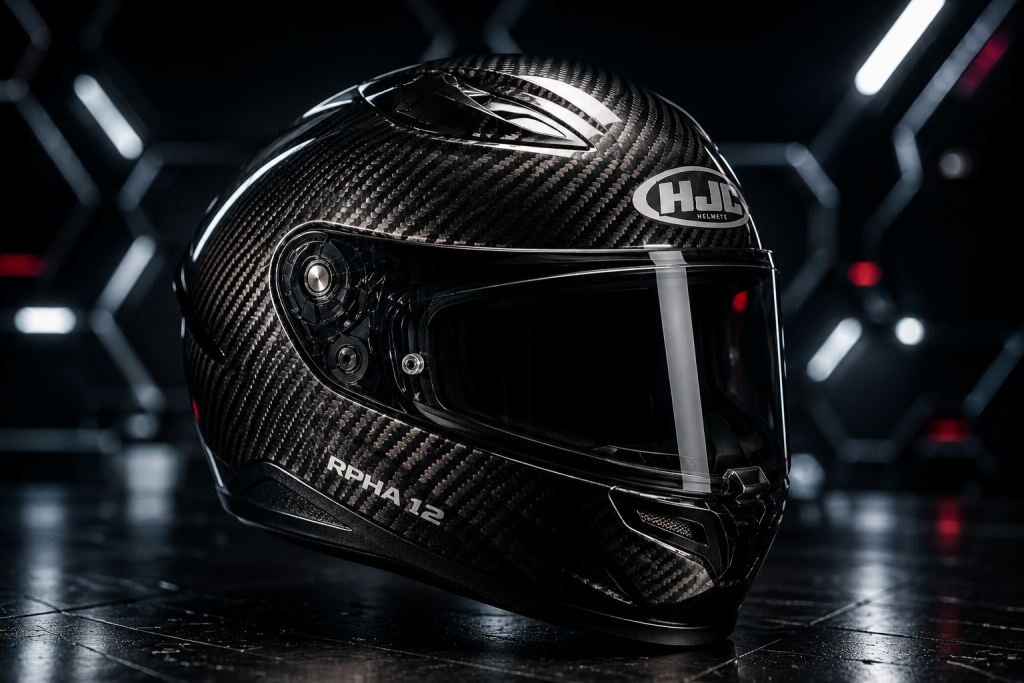
| HJC RPHA 12       | Premium Hyper-Sport| ECE R22.06         | Ultra-light weight |
|                   |                    |                    | for street fighters|
+-------------------+--------------------+--------------------+--------------------+
| HJC RPHA 91       | Elite Flip-Up      | ECE R22.06 (P/J)   | Neutralizes heavy  |
|                   | Touring Modular    |                    | modular components |
+-------------------+--------------------+--------------------+--------------------+
In the RPHA 1, the P.I.M. Plus matrix provides the structural fortress required to clear the elite FIM safety homologation, giving MotoGP racers complete confidence at 220 mph. In the hyper-sport RPHA 12, the technology is utilized to create an ultra-lightweight, aerodynamic street weapon that slices through wind drag effortlessly.
Even in their elite modular touring helmet, the RPHA 91, HJC applies P.I.M. Plus to offset the heavy mechanical hinges and internal sun shields inherent to flip-up designs, ensuring that touring riders can enjoy premium modular convenience without enduring a heavy, neck-straining lid.
Final Review Summary: Pros and Cons of P.I.M. Plus Technology
Pros
Uncompromising Safety Profile: Multi-layered carbon composite matrix delivers elite impact absorption and exceptional puncture resistance.
Significant Weight Reduction: Eliminates excess resin and heavy plastics, drastically lowering neck fatigue and physical exhaustion.
Masterful Rotational Defense: The micro-elasticity of the fiber weave excels at deflecting dangerous angled twisting forces.
Track-Proven Lineage: The exact same shell architecture trusted by Grand Prix world champions on MotoGP circuits.
Cons
Premium Retail Pricing: The complex manufacturing process and high-cost technical fibers place these helmets at a premier price tier.
Acoustic Profile: Because the composite shell walls are engineered to be thin and rigid to save weight, they can conduct high-frequency mechanical engine notes slightly more than thick, damp polycarbonate street lids, though advanced internal padding manages wind noise beautifully.
Final Verdict
HJC’s P.I.M. Plus technology stands as a monument to what can be achieved when a manufacturer refuses to accept industry compromises. By weaving together carbon fiber, carbon-glass hybrids, aramid, and organic fiberglass into a singular structural masterpiece, HJC has successfully dissolved the barrier between ultra-lightweight ergonomics and top-tier structural protection. It transforms the riding experience, turning a piece of heavy safety equipment into a weightless, high-performance extension of the rider’s body. If you are a motorcyclist who refuses to compromise on the safety of your brain, and you demand all-day physical comfort across thousands of miles of open asphalt, investing in an HJC RPHA helmet powered by P.I.M. Plus technology is an exceptional, life-saving decision that is worth every single penny.
